
Why Winter Is the Best Time to Own a Cold Plunge
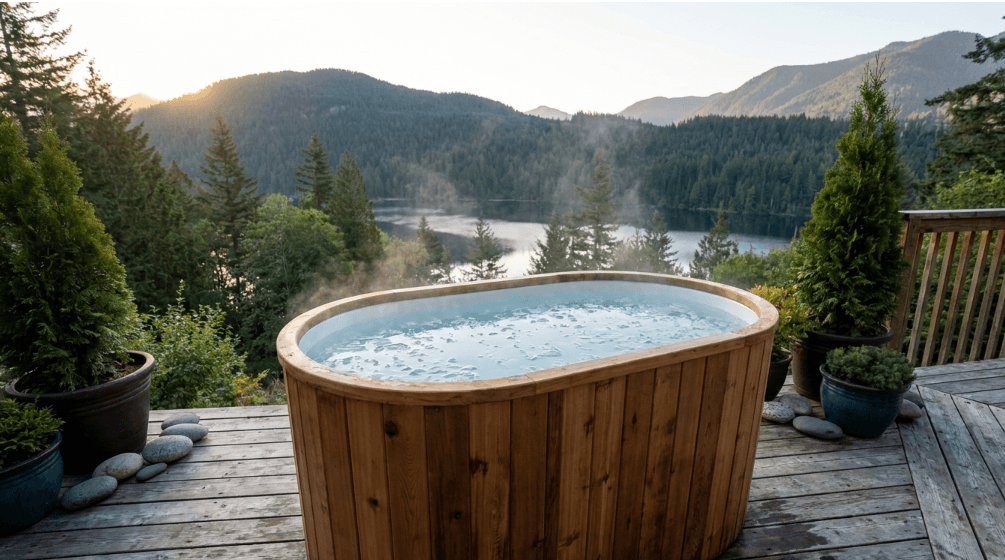
Winter is the cheapest season to run a cold plunge because the chiller does less work: a smaller gap between outdoor ambient temperature and the target water temperature means less compressor cycling and a lower electric bill than the same unit running through a summer heat wave. It is also, somewhat counterintuitively, the easier season to build a consistent habit, since the routine gets set before warm weather offers an excuse to skip it.
Lower Chiller Load Means Lower Operating Cost
A chiller’s job is to fight the difference between ambient temperature and the set point, usually somewhere in the high 30s to mid 50s Fahrenheit. In summer, an 85-degree ambient day means the compressor works constantly to hold that target. In winter, ambient air might already sit close to or below the target, so the chiller barely has to run at all, sometimes just cycling on briefly to maintain the setting rather than fighting against it continuously. Owners in colder climates regularly report noticeably lower power draw from November through March compared with peak summer months. Tracking the difference is as simple as noting the outlet’s usage on a smart plug for a month in winter and comparing it against a month in summer, which gives a real number rather than a rough estimate for anyone curious about the actual seasonal swing.
Freeze Protection Is a Real Setup Consideration
None of this means winter is maintenance-free. An outdoor unit needs a chiller rated to keep circulating water through sub-freezing air without the lines cracking, and standing, unmoving water in an unheated space can freeze solid within hours during a hard cold snap. Insulated tank walls help retain the chiller’s work and reduce how hard the compressor has to fight, and a cover cuts evaporative heat loss between sessions. Anyone buying specifically for year-round outdoor use in a genuinely cold climate should confirm the chiller’s minimum operating temperature before ordering rather than assuming all units handle it the same way. A drain valve positioned low enough to fully empty the tank, without water pooling in the base, also matters if you plan to lay the unit up for a stretch during an especially harsh cold snap rather than keeping it running continuously.
The Habit-Building Argument for Starting in Winter
Starting a cold plunge routine in winter removes the easiest excuse to skip a session, since the water is already going to feel like a shock regardless of the season. People who build the habit through the coldest months tend to find spring and summer sessions feel easier by comparison rather than harder, because the mental barrier was already crossed. Waiting for warmer weather to start often just delays the habit rather than making it easier to begin.
What the Evidence Actually Says About Cold Exposure
A 2025 systematic review and meta-analysis of cold-water immersion found generally positive associations with wellbeing outcomes across the studies it covered, though the authors were careful to describe these as associations built on regular, repeated exposure rather than proof that any single session produces a lasting effect. Separately, research on cold-water immersion used specifically for post-exercise recovery has produced mixed results, and a Cochrane review found it helps with short-term muscle soreness more clearly than it helps with broader recovery or performance markers. None of that changes with the season; the physiological picture is about consistency of use, and winter happens to be a season that makes consistency easier to build for the reasons above.
Placement and Insulation Choices That Matter More in Cold Weather
A location with some wind break, even a simple fence panel or a covered patio roof, cuts down significantly on how much the water surface loses heat to moving cold air between sessions. Tank insulation quality varies more than people expect between budget and mid-range units, and it is worth checking whether a model has real foam-core insulation in the shell or just a thin liner, since that difference shows up directly in winter operating cost. SweatDecks lists insulation type and chiller minimum operating temperature on its cold plunge listings, which is useful information to compare before choosing a specific model for year-round outdoor use.
How Winter Buying Timing Affects Price and Availability
Retailers often see demand for cold plunges dip in the coldest months and climb again in spring as warmer-weather buyers start thinking about recovery gear for the season ahead, which means late fall and winter can be a better window for finding inventory and, occasionally, better pricing than the spring rush. Lead times on popular models tend to stretch out once demand picks up in March and April, so ordering in November or December for a winter start often means a shorter wait than ordering the same model three months later. This is a secondary reason to consider a winter purchase beyond the lower operating cost argument, though availability varies enough by brand and season that it is worth checking current lead times rather than assuming they hold every year.
Setting Realistic Expectations for a Winter Start
None of this requires extreme cold tolerance to begin. Most people start at the warmer end of the typical range and adjust down gradually over weeks, and that pacing works the same whether the calendar says December or June. The main difference in winter is the walk from the house to the tank, which is genuinely less pleasant, and building a quick routine, robe and slides by the door, a towel already out, removes most of that friction within the first couple of weeks. Keeping a heated space nearby to warm back up afterward matters more in winter than in summer, since standing around outside in wet skin after a plunge is a much bigger factor in how the whole experience feels than the water temperature itself. A short, brisk walk back indoors followed by dry layers and something warm to drink handles most of this without any special equipment.
Frequently Asked Questions
Does a cold plunge chiller work harder in winter? Easier, generally. A smaller gap between ambient and target temperature means less compressor cycling and lower power draw than in summer.
Can a cold plunge freeze outdoors in winter? It can if the unit is not rated for freezing temperatures. Checking the manufacturer’s cold-weather rating before buying for an unheated outdoor spot matters.
Is starting in winter harder for beginners? Mentally maybe, but physically the water temperature is set by the chiller or ice regardless of season, so the sensation is the same year-round.
Do people stick with it better starting in winter? No formal research tracks this directly, but people who build the habit through colder months tend to keep it once easier weather arrives.
References
- Effects of cold-water immersion on health and wellbeing: A systematic review and meta-analysis, PLoS One, 2025
- Effects of cold water immersion after exercise on fatigue recovery and exercise performance: meta analysis, Frontiers in Physiology, 2023
- Cold-water immersion (cryotherapy) for preventing and treating muscle soreness after exercise, Cochrane Database of Systematic Reviews, 2012